


Costa Brava is an ideal charter destination if you want to explore dramatic cliffs, hidden coves, elegant resorts, and authentic Catalan harbor towns within a single week. The region offers flexible cruising styles: you can choose short, comfortable daily legs for a relaxed holiday, or include longer and more exposed passages if you want a more rewarding sailing challenge. With well-equipped marinas and plenty to see ashore, Costa Brava works well for both first-time charter crews and more experienced sailors. The routes below help you quickly decide which departure point and weekly rhythm suit your crew best.
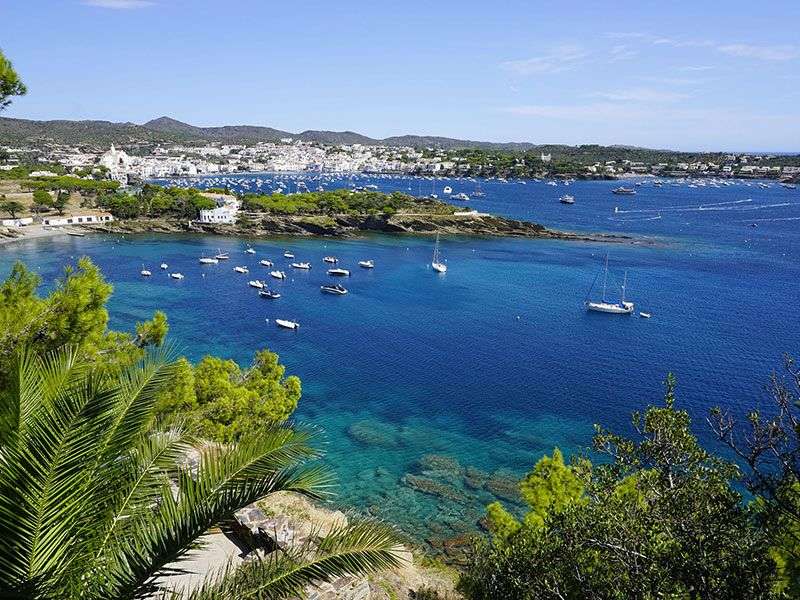
This article gives you an overview of the following topics:
- Which month is best for sailing in Costa Brava?
- Where to sail in Costa-Brava? – coasts and islands
- 4 reasons why it is a good choice to sail on Costa-Brava
- Sail in Costa Brava! Costa Barva sailing tours
- Marine gas around Costa Brava
Which month is best for sailing in Costa Brava?
In Costa Brava, the best months for sailing are usually May–June and September. During these periods, the weather is pleasantly warm, the sea is generally more inviting, and the peak summer crowds are either yet to arrive or have already faded, making the coves, marinas and coastal passages feel far more relaxed.
Spring: From March to May, Costa Brava gradually warms up, with daytime temperatures usually ranging from 15 to 23 °C, while the sea remains on the cool side at roughly 13 to 18 °C. Early in the season, sailors enjoy crisp air, clear visibility and quieter ports, with a more spacious feel along the coast. Winds can be livelier in spring, especially in the northern stretches, where the Tramuntana may shape the day’s route with stronger gusts and a more energetic sea state. For many crews, this is the season of fresh light, dramatic scenery and rewarding, sportier sailing.
Summer: From June to August, Costa Brava settles into its classic Mediterranean rhythm. Daytime temperatures generally sit around 25 to 30 °C, and sea temperatures rise progressively to about 20 to 23 °C. Mornings are often calmer, while local afternoon breezes frequently build enough to create enjoyable and reliable sailing conditions for shorter coastal hops. This is also the busiest time on the water: marinas and anchorages around places such as Palamós, L’Escala and Cadaqués become livelier, the coastline feels more animated, and the most popular bays tend to fill earlier in the day.
Autumn: From September to November, Costa Brava often feels at its most balanced. In early autumn, air temperatures still hover around 20 to 27 °C, and the sea keeps much of summer’s warmth at roughly 20 to 23 °C, making both swimming and comfortable cruising very appealing. September is especially attractive for yacht charter sailing because the water is still warm, the busiest holiday crowds have eased, and the coast regains a more relaxed, elegant pace. By October, unsettled days and rain become more likely, and toward November the Tramuntana can return more assertively, bringing rougher seas to the more exposed northern sections.
Winter: From December to February, Costa Brava becomes quieter, cooler and notably windier. Daytime temperatures generally remain around 12 to 16 °C, nights feel fresh, and sea temperatures fall to about 13 to 14 °C. Winter sailing here is strongly shaped by the Tramuntana, especially around Alt Empordà and Cap de Creus, where it can blow hard for several days and build a steeper, more demanding sea. In return, marinas are calm, the anchorages feel serene, and the coastline reveals a more dramatic, stripped-back beauty that tends to appeal most to experienced sailors planning carefully around the forecast.
4 reasons why sailing on the Costa Brava is a good choice
- Varied coastlines: The Costa Brava coastline is characterized by spectacular towering cliffs, hidden coves and crystal clear waters. This type of sailing offers sailors a unique and exciting experience. Along the coast, there are picturesque towns such as Cadaqués, Tossa de Mar and Palamós, which offer a mix of history, culture and delicious local cuisine.
- Favourable weather conditions: The Costa Brava has a Mediterranean climate, with warm temperatures and plenty of sunshine, making it ideal for sailing almost all year round. The region is dominated by the constant Tramontana winds, which provide ideal sailing conditions for beginners and experienced sailors.
- Well-equipped ports: The Costa Brava has a network of modern ports with excellent facilities, including petrol stations, repair services and food shops.
- Cultural and historical attractions: The Costa Brava has a rich history, with ancient Roman ruins, medieval castles and charming fishing villages.
The region has been a source of inspiration for artists such as Salvador Dalí, and you can visit his museum in Cadaqués.
Where to sail in Costa-Brava? – coasts and islands
The Costa Brava offers a diverse sailing experience with stunning bays, picturesque towns and historic sites. Rent a boat in Costa Brava and experience what it feels like when everything is perfectly timed – the sunset, the sea, and freedom.
Northern Costa Brava
Cap de Creus: This rugged peninsula is a nature lover’s paradise, with dramatic cliffs, secluded coves and crystal-clear waters. Cadaqués: A charming fishing village with narrow, winding streets and colourful houses, it was once a favourite of Salvador Dalí. Port de la Selva: This picturesque port town is a great base for exploring the northern Costa Brava, with easy access to Cap de Creus and the Med Islands.
Central Costa Brava
Tossa de Mar: This medieval walled town is one of the most beautiful towns on the Costa Brava, with stunning beaches and a historic centre. Lloret de Mar: This lively resort town offers a mix of beaches, nightlife and water sports. Palamos: This lively port town is a great place to stock up and try out the local gastronomy.
South Costa Brava
Begur: This charming town is known for its medieval castle and beautiful beaches such as Aiguablava and Sa Tuna. Palafrugell: This coastal town is famous for its traditional fishing villages such as Calella de Palafrugell and Llafranc. Islas de Médes: This marine reserve is a great place for snorkeling and diving, with a diverse range of marine life.
The main ports
The Costa Brava has many well-equipped marinas. Here are just the most important ones:
Port de Blanes
The port is operated by the Banes Sailing Club. They have 309 moorings for yachts with a maximum length of 24 metres. You can find a café, a restaurant and a sailing school in the club. They combine commercial fishing activities with recreational sailing. Blanes sailing, boat rental Blanes 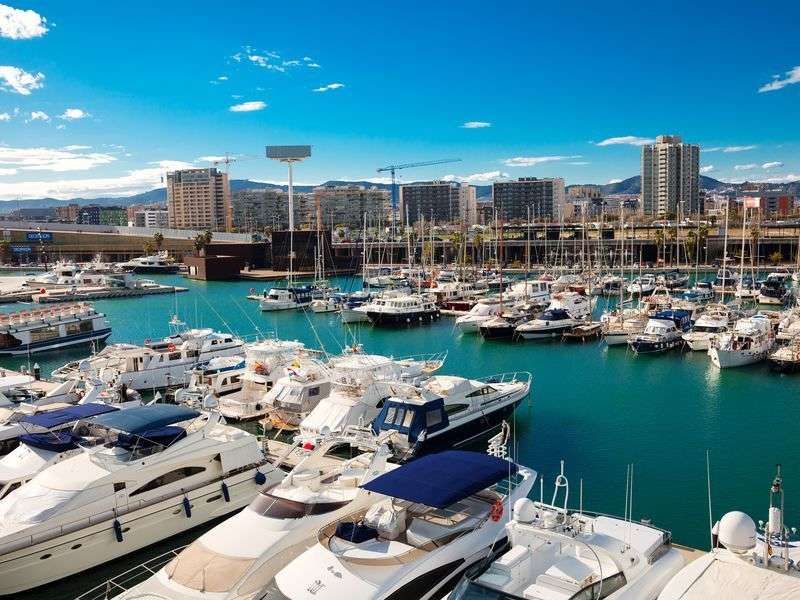
Club Nàutic Estartit
The port is located in the L’Estartit resort. They have 643 moorings for yachts as long as 32 metres. The depth of the water is 2.3 metres. It is a protected port with several great services offered, and there is also a bar and a restaurant here. Info about L’Estartit sailing.
Club Nautic Cambrils
Suitable for 426 yachts, they can be 8 to 25 meters long. The area includes 8 areas that can cover a wide range of yacht maintenance and repair services. There is a bar, restaurant, Wi-Fi and 24-hour service and assistance. Club Nautic Cambrils. yacht charter Cambrils
Port Vell
Barcelona is one of the most important port cities on the Adriatic Sea. Port Vell offers 148 moorings for yachts not longer than 190 metres. They have drinking water, electricity and cable TV. Barcelona sailing, boat rental Barcelona
Sail in Costa Brava! Costa Barva sailing tours
1-week sailing plan from Blanes
This one-week route from Blanes combines some of Costa Brava’s best-known resorts with many shorter legs and easy daily planning. It’s a strong choice if you want a varied coastal cruise, though the longer return section is best handled with close attention to wind and timing. Recommended level: beginner Open sea passages: no
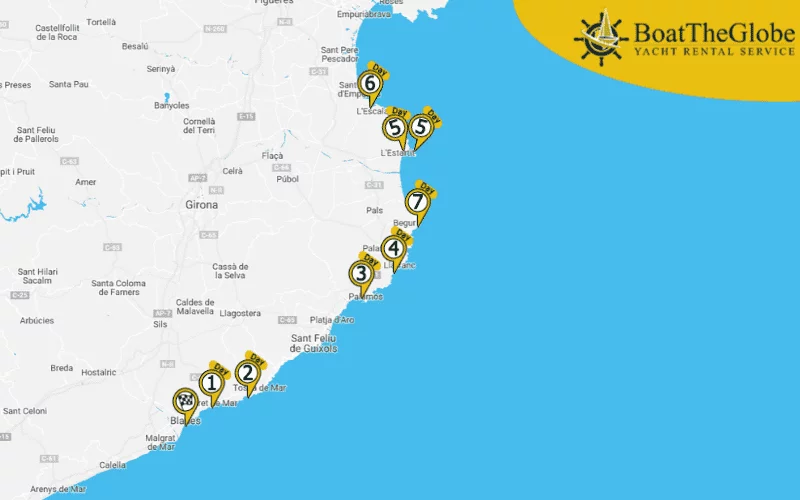
1. nap: Blanes – Lloret de Mar (2.5 nm – Vitorlázási idő*: kb. 1 óra)
The next stop of our trip is Lloret de Mar, which is not only the biggest holiday resort in Costa Brava but the centre of nightlife, too. If you like to have fun, this place has many discos, pubs and entertainment venues to offer. The city has a pebbly-sandy beach, but be careful because the water deepens quickly. You do not mind crowded beaches? Then choose the 1, 5 kilometres long main beach. If you prefer quieter places, visit Fenals or Boadella. The Santa Clotilde Garden offers a gorgeous view of the sea. The medieval Castillo Castle rises above Sa Caleta. You can try delicious dishes and tasty drinks in Lloret de Mar’s restaurants and wine taverns. Spend the night in the city’s port.
2. nap: Lloret de Mar – Tossa de Mar (5.1 nm – Vitorlázási idő*: kb. 1 óra)
Tossa de Mart is considered to be one of the most beautiful villages in Costa Brava, it is referred to as the ‘Spanish Saint Tropez’. If you want to relax in a peaceful place, this village is a perfect choice. It is also recommended for families. Water enthusiasts can discover beaches like Playa Gran or Mar Menuda. The Cala Futadera is located in a wide bay, perfect for snorkelling. It has no services. Explore the medieval old town of Tossa, which has beautiful historic monuments. Spend the night at the port of Tossa de Mar.
3. nap: Tossa de Mar – Palamos (11.5 nm – Vitorlázási idő*: kb. 2 óra)
The next stop our trip, Palamos, is also known for its quiet, small-town atmosphere. It is perfect for relaxing and getting to know the local Catalan culture. If you want to go sunbathing and swimming, choose the 3 kilometres long beach. The town offers picturesque hiking trails and historic monuments. Palamos is famous for its seafood, especially for the prawns caught by local fishermen. It has a great fishing museum called Museu de la Pesca. Spend a night at the city’s port. Read more about what to do in Palamos or Palamos sailing. rent a boat in Palamos.
4. nap: Palamos – Llafranc (5.5 nm – Vitorlázási idő*: kb. 1 óra)
A beautiful, sandy beach is waiting for you at this idyllic, peaceful holiday resort. The sea is clear, safe, slowly deepening, making it perfect for families with small children. The town also has great sports facilities: tennis club, diving school, golf courses. The Sant Sebastian lighthouse is located on Sant Sebastian Mountain. It offers a wonderful view of the surrounding towns. The typical Catalan atmosphere of the town is enriched by Sangria and local delicacies. Spend the night at the port of Llafranc.
5. nap: Llafranc – Medes Islands and L’Estartit (11.1 nm – Vitorlázási idő*: kb. 2 óra)
This tiny archipelago has a rich abyssal fauna and is very popular among divers. You can go waterskiing and kayaking or play golf as well. The town of L’Estartit is located about 2 kilometres from Medes Islands, and it provides a fantastic view from the Roca Maura hill. If you are looking for a delicious local meal, visit the local Cal Tat bar. In the evening, have a rest in the port of L’Estartit.
6. nap: L’Estartit – L’Escala (6.7 nm – Vitorlázási idő*: kb. 2 óra)
We are going to stop at L’Escala, which is a significant fishing port and a tourist centre. There are great beaches here, and we can try several watersports. If you are interested in Catalan culture, there are countless museums and monuments here. Try the typical local speciality, the delicious anchovy. You can spend the night in the port of L’Escala.
7. nap: L’Escala – Begur – Blanes (39.8 nm – Vitorlázási idő*: kb. 7 óra)
This town is one of the hidden treasures of Costa Brava. It is famous for its white Mediterranean houses. This coastline is less known than the previously mentioned holiday resorts, it does not have a loud nightlife. If you drop anchor at Begur, you can swim at gorgeous beaches. You can find the sandy Aiguablava beach which is one of the best and most beautiful places in Costa Brava. It is located in a breathtaking bay. The pebbly-rocky Platja Fonda is also a great beach, but there are no services. The pebbly Sa Tuna is also a great choice. Begur is famous for the ruins of Castell de Begur, a castle built on a hill in the 17th century. It offers a wonderful view of the area. The Old Town is characterized by narrow streets and the beauties of Moorish and Spanish architecture. Spend the night at the city’s port. After visiting Begur we return to the first stop of our journey, Blanes. Read more about what to do in Blanes or Blanes sailing. Rent a boat Blanes. If you are looking for some more fun, there is a mini-golf course, the Garbi Minigolf. Do you have more time? In the Old Town, you can see historic monuments such as the Santa Maria Parish Church, the castle or the fountain. The palm tree-lined promenades are ideal for relaxing a little. If you go swimming, choose the 650 metres long sandy beach where water sports facilities are also available. Do you love nature? Visit the world-famous botanical garden called Járdin Botanic Marimurtra. There are 6000 flower and plant species in the 16-hectare area, and the lookout points offer a wonderful view over the town. The other botanical garden, Pinya de Rosa is also worth seeing, it is the world’s largest cactus garden. If you are looking for fantastic views, do not miss out on the Castillo de San Juan castle. You can see not only the sea but in clear weather, the silhouette of Montjuic Hill in Barcelona is also visible. Spend the night in the port of Blanes.
* – egy átlagos 43 lábas vitorlás, átlagos időjárási körülmények között, óránként körülbelül 6-7 csomó sebességgel halad.
Sailing trip from Palamós
The Palamós itinerary is built around short daily distances, making it a great option for a gentler marina-to-marina charter. The final longer leg requires an early start and a suitable weather window, but overall the route is friendly and easy to manage. Recommended level: beginner Open sea passages: no
Our adventure starts in Palamós and after exploring the surrounding spots in Costa Brava, this is where we return.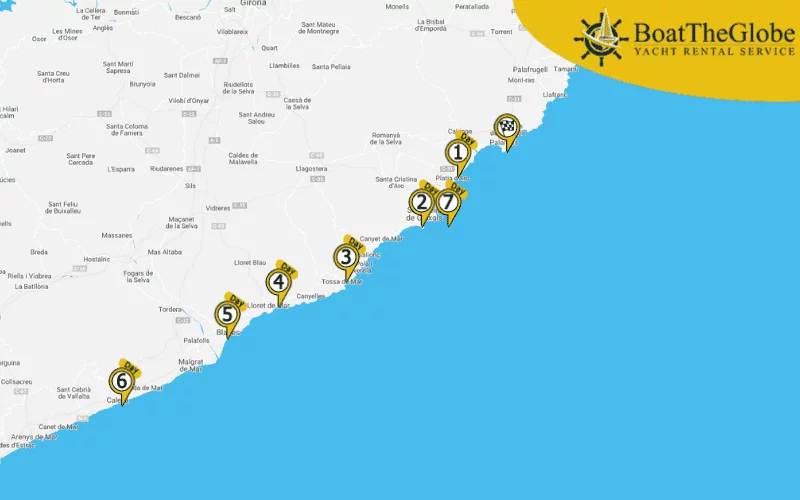
1. nap: Palamós – Platja d’Aro (3.5 nm – Vitorlázási idő*: kb. 1 óra)
Apart from the main beach the village also boasts some other, smaller beaches. Platja d’ Aro is dotted with splendid bars and restaurants, often enlivened by live music. If you visit this village you can enjoy such events as the Sant Isidre Festival in May, the Jazz Nights in the summer or the Beer Festival in October. Spend the night in the village’s port.
2. nap: Platja d’Aro – Sant Feliu de Guíxols (3.4 nm – Vitorlázási idő*: kb. 1 óra)
Our next destination is Sant Feliu de Guíxols, awaiting us with tiny, pinewood-framed coves, lined with crystal clear rocky or fine sandy beaches. Take a pleasant stroll down on the town’s unique, wide, sandy walkway, lined by trees. Spend the night in the town’s port.
3. nap: Sant Feliu de Guíxols – Tossa de Mar (5.9 nm – Vitorlázási idő*: kb. 1 óra)
If you are looking for a truly relaxing place, Tossa de Mar is the place to be! The town that is also often referred to as the ‘Spanish Saint Tropez’ takes pride in such heavenly beaches as Playa Gran, Mar Menuda or Cala Futadera. Visit the medieval Old Town of Tossa, and explore the fantastic historic monuments. Spend the night in the town’s port.
4. nap: Tossa de Mar – Lloret de Mar (4.7 nm – Vitorlázási idő*: kb. 1 óra)
Our next stop is Lloret de Mar, the centre of nightlife in Costa Brava, crammed with discos and clubs. As compared to its impressive 0.8 nm length, the town’s beach still counts quite crowded. If you are a nature lover, visit the Santa Clotilde Gardens and immerse yourself in the breathtaking vistas. The town is also home to some superb restaurants and wine bars.Spend the night in the town’s port.
5. nap: Lloret de Mar – Blanes (3.0 nm – Vitorlázási idő*: kb. 1 óra)
Blanes is lined with heavenly beaches. If you love nature, visit the Marimurtra or the Pinya de Rosa botanical gardens. The latter is renowned for its cacti. Are you after some jaw-dropping views? Visit Castillo de San Juan, from where, in favourable weather conditions, you can even see the silhouette of the Montjuic Mountain.
6. nap: Blanes – Calella (7.9 nm – Vitorlázási idő*: kb. 2 óra)
As you approach Calella, the coastline becomes lined with well-maintained beaches and promenades, backed by rolling hills and Mediterranean vegetation. The town is known for its vibrant atmosphere, long sandy beach, and charming old-town streets. In good weather, anchoring near the coast is a perfect opportunity for a refreshing swim or a relaxing sunset break on board.
7. nap: Calella – Mataró – Palamós (36.4 nm – Vitorlázási idő*: kb. 6 óra)
On the last day, we spend more time on the yacht then turn back towards Mataró to our original point, Palamós. After bringing back the yacht it is worth looking around in Palamós if you have some time. The town is famous, and not only for the locally caught prawns, but it’s also an important port. Its gorgeous beach stretches for 1.6 nm and the area is lined with fantastic hiking trails. The Old Town is brimming over with historic monuments and is full of great viewpoints. If you feel like grabbing something tasty, superb local restaurants are plentiful to choose from: Can Blau, Restaurante Caleta Blava, La Gamba, Hotel Marina Restaurant or the Mas dels Arcs, just a few to mention.
* – egy átlagos 43 lábas vitorlás, átlagos időjárási körülmények között, óránként körülbelül 6-7 csomó sebességgel halad.
Costa Brava sailing from Barcelona (South)
The route from Barcelona is a longer coastal cruise with an urban departure, several marina stops, and a few more demanding daily runs. It suits crews who want strong infrastructure and comfortable logistics, but the busier waters and longer legs call for more attention underway. Recommended level: intermediate Open sea passages: yes
Day 1: Barcelona – Castelldefels (16.4 nm – Sailing time*: about 3 hours), Day 2: Castelldefels – Sitges (5.3 nm – Sailing time*: about 1 hour), Day 3: Sitges – Vilanova i la Geltrú (5.2 nm – Sailing time*: about 1 hour), Day 4: Vilanova i la Geltrú – Tarragona (26 nm – Sailing time*: about 4 hours), Day 5: Tarragona – Cambrils (9.2 nm – Sailing time*: about 1.5 hours), Day 6: Cambrils – Coma-ruga (23.8 nm – Sailing time*: about 4 hours), Day 7: Coma-ruga – Garraf – Barcelona (34.4 nm – Sailing time*: about 5.5 hours)
* – an average 43 ft sailing yacht, with average weather conditions, sails around 6-7 knots per hour.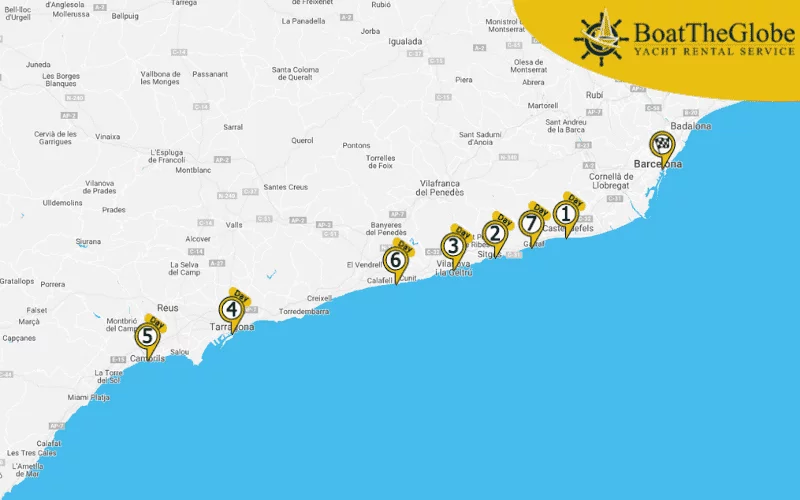
Sailing itinerary from Roses (North)
The 7-day plan from Roses stretches toward northern Costa Brava and the French coast, so it includes longer and more exposed sections. It is best for crews who enjoy a more expedition-like rhythm and feel confident sailing in wind-sensitive, more open waters. Recommended level: advanced Open sea passages: yes
Day 1: Roses – Cadaqués (9.4 nm – Sailing time*: about 1.5 hours), Day 2: Cadaqués – El Port de la Selva (11.2 nm – Sailing time*: about 2 hours), Day 3: El Port de la Selva – Portbou (6.2 nm – Sailing time*: about 1 hour), Day 4: Portbou – Salses-le-Château (Port Leucate) (29.5 nm – Sailing time*: about 5 hours), Day 5: Port Leucate – Narbone (19.7 nm – Sailing time*: about 3.5 hours), Day 6: Narbone – Lagoon La Berre (Port la Nouvelle) 15, (44.8 nm – Sailing time*: about 7 hours), Day 7: Port la Nouvelle – Roses (55.4 nm – Sailing time*: about 9 hours)
* – an average 43 ft sailing yacht, with average weather conditions, sails around 6-7 knots per hour.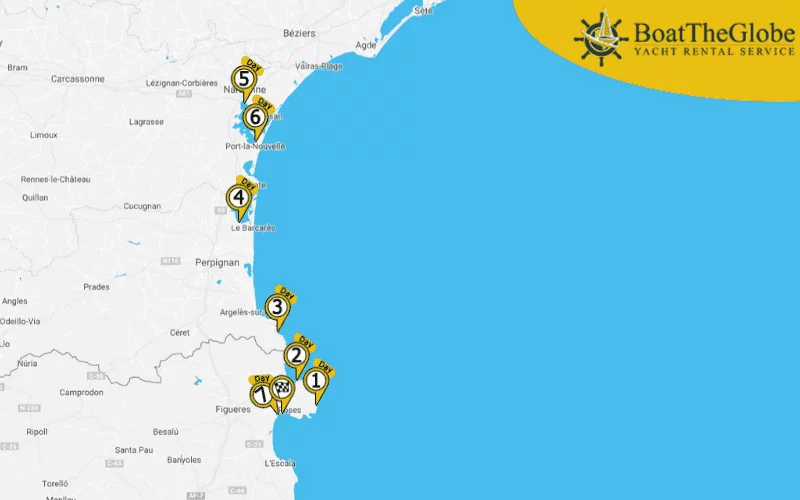
How to choose a Costa Brava sailing route?
- If you want short and comfortable daily legs: choose the route from Blanes or Palamós, where it is easier to keep the week flexible.
- If marina services and urban infrastructure matter most: the Barcelona route is a strong option thanks to its well-equipped stops.
- If you want more exposed passages and a stronger touring feel: the Roses itinerary offers greater distances and a more demanding sailing experience.
- If you are sailing with family or a less experienced crew: stay with shorter coastal stages and avoid building the whole week around one long day.
Marine gas around Costa Brava
- BARCELONA: Depth: 6 m, Working time: 0-24 depending on the season (to be agreed upon before arrival) depending on the season (to be agreed upon before arrival), GPS Coordinates: 41.3888, 2.159
- BARCELONA: Depth: 6.00m, Working time: 8–22, GPS Coordinates: 41° 23.1128, 2° 12.0265
- BLANES: Depth: 1, 8-7m, Working time: 0-24 depending on the season (to be agreed upon before arrival) depending on the season (to be agreed upon before arrival), GPS Coordinates: 41.6742, 2.7904
- CAMBRILS: Depth: 8 m, Working time: 9-19, GPS Coordinates: 41.06477355957031, 1.0590695142745972
- EL MASNOU: Depth: 3 m, Working time: 0-24 depending on the season (to be agreed upon before arrival) depending on the season (to be agreed upon before arrival), GPS Coordinates: 41º 28′ 30″, 02º 18′ 47″
- L ESTARITIT: Depth:4 m, Working time: 8-21, GPS Coordinates: 42.0540057, 3.2013105
- LLORET DE MAR: Depth:2-4m, Working time: 0-24 depending on the season (to be agreed upon before arrival) depending on the season (to be agreed upon before arrival), GPS Coordinates: 41.70706558227539, 2.8809142112731934
- PALAMOS: Depth:7m, Working time: 6-23, GPS Coordinates: 41º 50, 4 N i 03º 08, 1 E
- ROSES: Depth:3-5, Working time: 0-24 depending on the season (to be agreed upon before arrival) depending on the season (to be agreed upon before arrival), GPS Coordinates: 42.2632018, 3.1755328
- SANT CARLES DE LA RAPITA: Depth:4, 5-5, Working time: 9-19, GPS Coordinates: 40.61808395385742, 0.5952594876289368
- SITGES: Depth:3, Working time: 9-19, GPS Coordinates: 41.11667, 1.25
- TARRAGONA: Depth:6, Working time: 6-22, GPS Coordinates: 041º06’20”001º15’08”
If you are a sailing enthusiast, visiting the coastline of Costa Brava is an unforgettable experience. You can find crowded holiday resorts with a vibrant nightlife, but peaceful, relaxing towns as well.Find yacht routes in Costa Brava or choose another yacht charter in Spain.
Request a quote for a Costa Brava charter and we’ll help you choose a route that matches your crew’s level and holiday style. Set sail well prepared and make the most of this spectacular Spanish coastline.
