


Why is Martinique good for sailing? Are you planning sailing tours in the Martinique? Martinique, the “Isle of Flowers”, the jewel of the French Caribbean, offers a wide range of stunning sailing destinations. With its vibrant marine life, picturesque beaches and charming coastal towns, the island is perfect for both novice and experienced sailors. We can help you with itineraries, ports, yacht rental options & other useful infomations. This article is for those looking for inspiration or a specific 7-day itinerary on the island of Martinique. 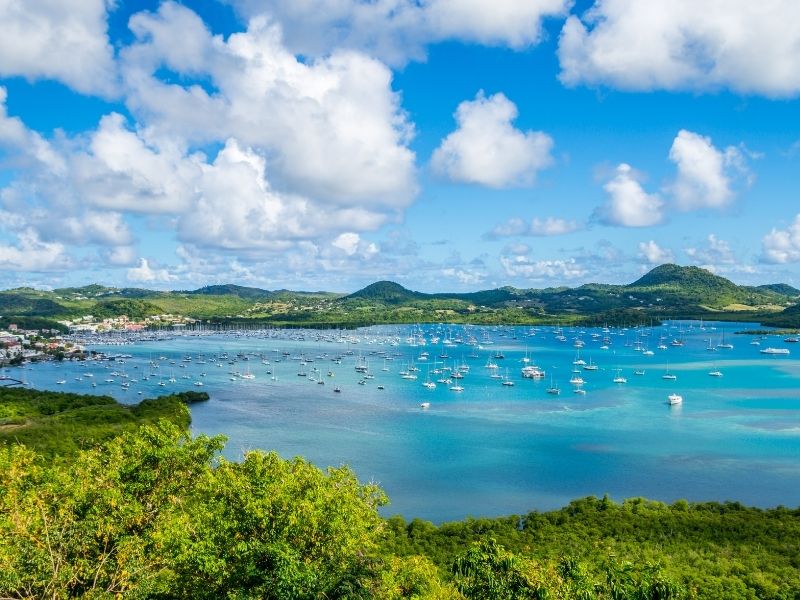
Here’s what the article will cover:
- 5 reasons,why Martinique is good for sailing?
- What is the best month to sail Martinique?
- Where to sail in Martinique? – ports and islands
- How can you get to Martinique from abroad? – entry info
- Sailing in Martinique – itineraries
5 reasons,why Martinique is good for sailing?
- Strategic location: Martinique is an excellent base for any charter sailor, as its central position in the Lesser Antilles allows for quick and convenient island hopping. From Le Marin or Fort-de-France, you can easily plan multi-day trips to sailing in Guadeloupe, St. Lucia, Dominica or even Guadeloupe. The island is a great choice for those who want to combine open-water sailing with shorter, more sheltered passages. As a French overseas territory, Martinique has modern provisioning infrastructure, making it easy and fast to stock up before departure. The proximity of the international airport also ensures smooth crew changes. You can plan routes to nearby islands from here as well, such as sailing to Guadeloupe.
- Ideal weather and sailing conditions: The trade winds blow steadily throughout the year, ensuring predictable sailing conditions around Martinique. In the dry season, from December to April, you can expect stable easterly winds and calm seas, making this the peak charter season. If you are a beginner skipper, the sheltered bays along the southern coast are ideal for practice. More experienced sailors can enjoy the open-water legs between the northern islands. It is wise to set off earlier each day, as currents and winds tend to strengthen slightly in the afternoon.
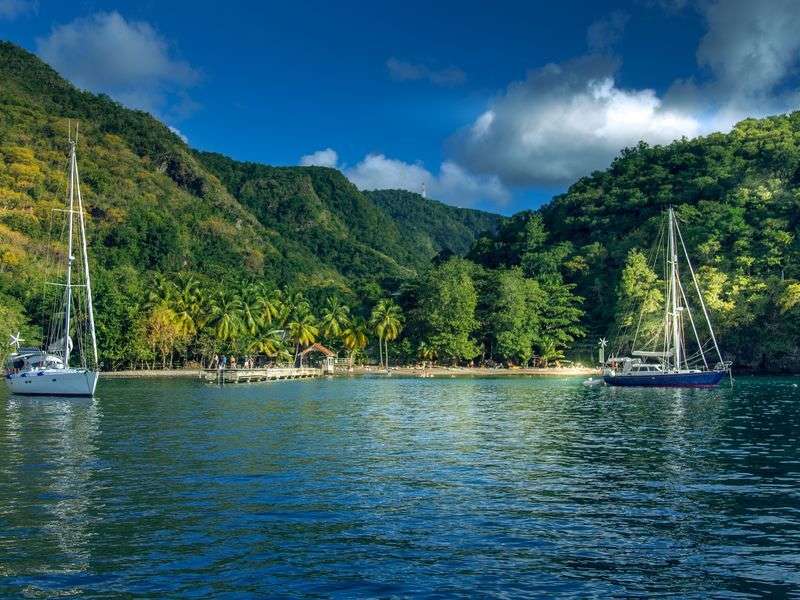
- Stunning natural beauty: Once anchored on the island, you will love the varied mooring spots: the northern shore offers black volcanic sand, while the south awaits with white sandy, turquoise bays. The landscapes around Mount Pelée are especially impressive from the water, so planning a short stop near St. Pierre is highly recommended. Thanks to the rich marine life of the coral reefs, be sure not to leave your snorkel gear on board, especially between Sainte-Anne and Les Anses-d’Arlet. Sea turtles and dolphins often appear in the early morning, so approach anchorages slowly.
- Rich culture and heritage: Once ashore, Martinique offers a cultural feast: Creole cuisine, fresh seafood and famous rum tastings await. Visiting local rum distilleries, such as Habitation Clément or the Depaz Distillery, is a popular program among charter sailors, offering firsthand insight into rum-making. Markets in the coastal villages are perfect for stocking up your galley with fresh, local ingredients that are easy to prepare on board. If your timing allows, arriving during the carnival is a memorable experience, as the areas around the marinas are especially lively and colorful.
- Excellent sailing infrastructure, diverse sailing routes: One of Martinique’s biggest advantages is its well-developed, sailor-friendly infrastructure. Le Marin Marina is one of the largest and best-equipped marinas in the Caribbean, offering all necessary provisioning, repairs and technical services. From here, you can easily plan short, calm passages toward Sainte-Anne, where palm-fringed beaches and crystal-clear bays await, or embark on longer trips toward Saint Lucia or Dominica. Most anchorages are well-protected, allowing for safe overnight stays. Rent a boat in Martinique and discover one of the Caribbean’s most exciting and most comfortably navigable sailing paradises.
What is the best month to sail Martinique?
The best time to sail in Martinique is from December to April, with the most stable conditions with minimal rain and steady trade winds. Winter (December to February): This is the dry season (locally known as Carême) with average temperatures of 23°C to 28°C and low humidity. There are constant trade winds from the east or northeast, blowing at speeds of 15-20 knots, with moderate waves, usually 1-2 meters. Ideal for smooth sailing. Spring (March to May): Still the dry season, temperatures begin to rise slightly, averaging 24°C to 30°C, with occasional short showers. Trade winds remain stable, but can ease to 10-15 knots later in the season. Waves are moderate, which is comfortable for less experienced sailors. Summer (June to August): This is the start of the wet season (Hivernage), with occasional rain and thunderstorms. Temperatures peak at 26°C-32°C with higher humidity. Milder trade winds blow, still steady, averaging 10-15 knots. The sea is generally calm, with occasional storms. Autumn (September to November): Warm and humid, 25°C-31°C, peaking with hurricane season (August to October). Milder, with winds around 5-10 knots, with occasional gusts in storms, and unpredictable weather patterns.
Where to sail in Martinique? – ports and islands
-
- Fort-de-France Bay: Located in Fort-de-France, the capital, Martinique’s largest port serves as a major hub for commercial shipping, ferries, and cruise ships. The city is known for its colonial architecture and bustling markets. Visit Fort Saint-Louis, a historic fortress with panoramic views, and sample local Creole and French cuisine.
- Les Trois-Îlets: Anchor near the charming town of Les Trois-Îlets, home to beaches like Anse Mitan and Pointe du Bout. Visit the La Pagerie Museum, the birthplace of Empress Josephine, play golf on one of the Caribbean’s best courses, or relax at luxury resorts.
- Diamond Rock (Rocher du Diamant): An iconic natural landmark, this dramatic rock formation is a favorite of photographers and snorkelers.
- Sainte-Anne and Les Salines Beach: Sainte-Anne is a picturesque village with access to the island’s most beautiful beaches.
- Anses-d’Arlet: A port near quaint fishing villages like Grande Anse d’Arlet and Petite Anse. Snorkel and dive with vibrant coral reefs and tropical fish.
- Saint-Pierre and Mont Pelée: Moor Saint-Pierre is a town rebuilt after a 1902 volcanic eruption with a historic port in the northwestern part of Martinique. Explore the ruins, the Volcano Museum, take a day trip inland, and climb Mont Pelée, Martinique’s iconic volcano.
- Tartane and Caravelle Peninsula: The Caravelle Nature Reserve is a quieter spot on the east coast known for its hiking trails, mangroves, and breathtaking views.
- Le François and L’Îlet Oscar: Anchor near L’Îlet Oscar or L’Îlet Thierry and enjoy turquoise lagoons and shallow sandbars, and sample rum at famous rum distilleries like Habitation Clément.
- Le Marin: Martinique’s premier port, one of the best-equipped in the Caribbean, and a key location for supplies and planning. Explore the town’s shops, markets and restaurants before you set off.
- Île Chancel: A tranquil island in Robert Bay, home to an old sugar plantation and wild iguanas.
yacht charter Martinique, bareboat yacht charter Martinique, sailing yacht charter Martinique, luxury yacht charter Martinique, crewed catamaran charter Martinique, catamaran charter Martinique, earyl booking yacht charter Martinique
How to get to Martinique? – entry info
Getting to Martinique, a French Caribbean island, is relatively easy as it has good air and sea connections. The Martinique Aimé Césaire International Airport (FDF) near Fort-de-France is the island’s main airport. There are daily flights from Paris (Orly Airport), Miami, and direct flights from several major cities such as Montreal, Brussels, Amsterdam, New York, and the Caribbean islands.
Sailing in Martinique – itineraries
HELP ME TO CHOOSESailing from Martinique to Saint Lucia
Day 1: Le Marin – Grande Anse d'Arlet (16.3 nm – Sailing time*: about 3 hours), Day 2: Grande Anse d'Arlet – Saint-Pierre (15.8 nm – Sailing time*: about 2.5 hours), Day 3: Saint-Pierre – Plage de l’Anse l’Etang (28.8 nm – Sailing time*: about 4.5 hours), Day 4: Plage de l’Anse l’Etang – Honeymoon Beach, Saint Lucia (63.5 nm – Sailing time*: about 10 hours), Day 5: Honeymoon Beach, Saint Lucia – Petit Piton, Saint Lucia (16.9 nm – Sailing time*: about 3 hours), Day 6: Petit Piton, Saint Lucia – Rodney Bay, Saint Lucia (17.2 nm – Sailing time*: about 3 hours), Day 7: Rodney Bay, Saint Lucia – Anse Figuier – Le Marin (25.3 nm – Sailing time*: about 4 hours)
* – an average 43 ft sailing yacht, with average weather conditions, sails around 6-7 knots per hour.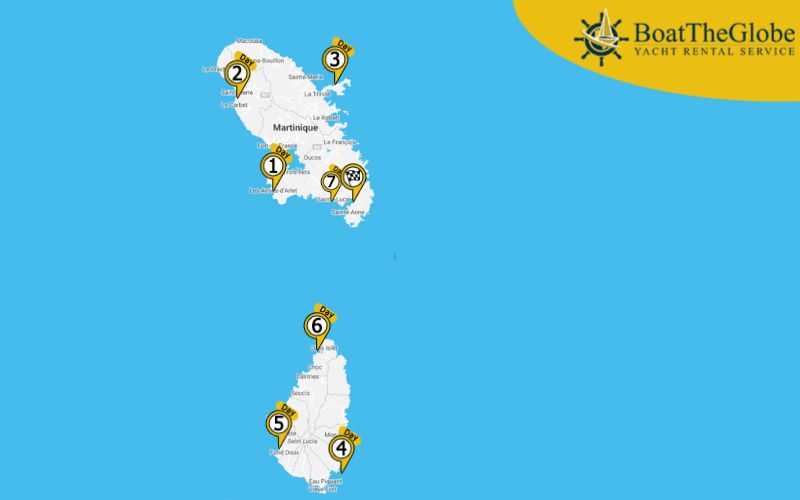
Forget about long lists, the hassle of local regulations, the stress! We will prepare your boat rental; all that’s left for you is the adventure. Fill out the form below, request a quote, book a yacht – and voila, you can splash into the turquoise waters of Martinique.
