


Is Saint Lucia Island good for sailing? Oh, absolutely. Really – if you’ve been daydreaming about gliding across turquoise waters or even planning to kick off your Caribbean sailing adventure from here, you’re in for a treat. Saint Lucia isn’t just another stop on a tropical map. No, it’s the kind of place that sticks with you. You’ll remember the salty sea breeze, the dramatic green peaks of the Pitons rising like sentinels, the quiet hush as your yacht slips into a secluded bay. It’s that feeling of effortless calm, mixed with a touch of adventure. This article will be the most useful read for those who want a comprehensive but friendly guide to the weather, routes, ports and attractions in Saint Lucia.
And the trade winds? They’re reliable. Gentle. Just right for smooth, carefree sailing. The ports and marinas? Warm, welcoming – the kind of island hospitality that makes you feel instantly at home, lines tied or not. And hey, even if you’re new to Caribbean waters, don’t sweat it. You’ll find your rhythm fast, and every trip here ends up feeling like a little celebration of the sea itself.
In this article, I’ll take you through some of the best spots to explore by boat in Saint Lucia – hidden coves, charming harbours, and unforgettable anchorages that make this island one of the Caribbean’s true sailing treasures.
Here’s what the article will cover:
- 5 reasons, why Saint Lucia is good for sailing?
- What is the best month to sail Saint Lucia?
- How can you get to Saint Lucia from abroad?
- Where can you sail to from Saint Lucia Island? – ports and islands
- Sailing in Saint Lucia – itineraries
5 reasons, why Saint Lucia Island is good for sailing?
- Stable trade winds
The northeast winds are almost always reliable here. You don’t have to worry about the wind dying down, but they don’t blow too hard either – just right to enjoy sailing without getting stressed. Many people find it relaxing to see the boat glide smoothly through the waters while the stunning views of the Pitons unfold before them. However, it’s always important to check the wind conditions before setting off. - Sheltered bays, perfect anchorage
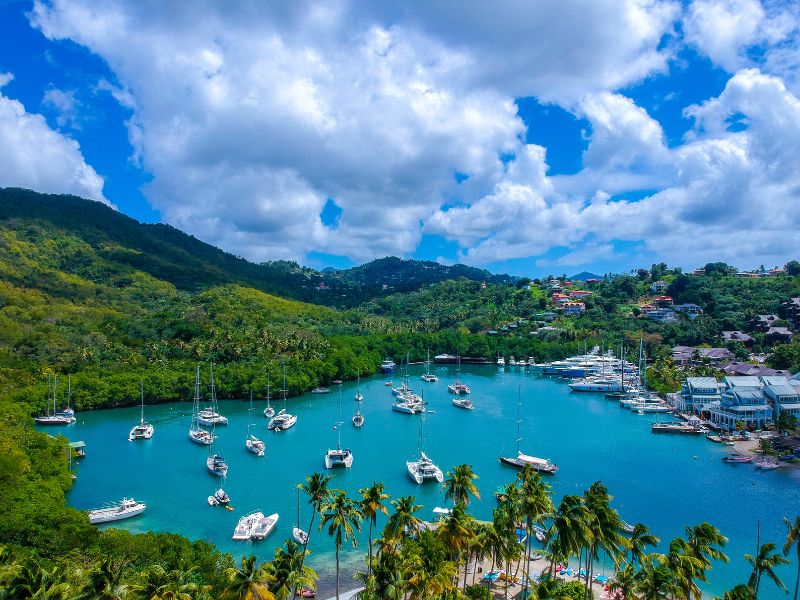
Bays like Marigot Bay or Rodney Bay are simply beautiful. The quiet bays are the real charm of the island – when the boat rocks and the scenery is fabulous. If you like both the boat and nature to be at peace, you’ll find it here. Charter a boat in Saint Lucia and explore the island’s most beautiful bays and coastlines with complete peace and perfect timing. - Scenic coastline and iconic locations
No two bends along Saint Lucia’s coast feel the same. The Pitons shoot up dramatically from the sea, and the volcanic beaches add that splash of contrast that makes every photo pop – honestly, it’s hard not to stop and just stare. Every turn reveals something new, a little surprise waiting for you. Sometimes, you really feel like you’re sailing through a living postcard.
A great starting point for the Caribbean
Feeling adventurous? From here, Martinique, St. Vincent, or the Grenadines are just a smooth sail away. Its central location gives you all the flexibility you could want: a relaxed day trip, or a multi-day island-hopping adventure – your call. I’ll never forget one afternoon when I managed to explore two hidden bays in just a few hours. Trust me, moments like that make you fall in love with sailing all over again. - Friendly ports and good infrastructure
The marinas are tidy, boat rentals are easy, fuel and services are easily available. The locals are friendly, curious and always give tips on where to dock or where to sail. For me, this combination gives me the peace and freedom that always makes me yearn to return to Saint Lucia.
What is the best month to sail Saint Lucia?
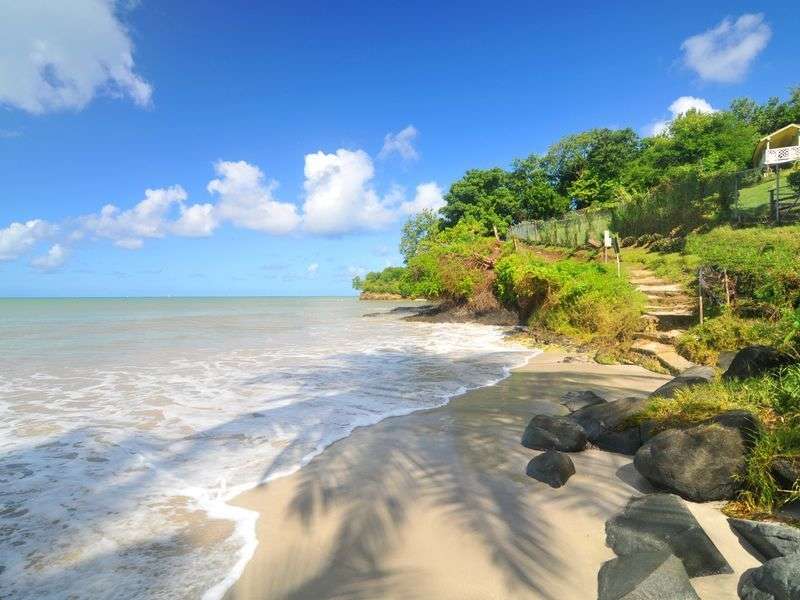
If you’re dreaming about sailing in Saint Lucia, let me give you one small tip – go between December and May. That’s when everything just clicks. The winds behave, the sun shows off, and the sea… well, it’s the kind of blue that doesn’t need a filter.
Winter’s full of energy – yachts in the marinas, music floating in from the shore, that unmistakable island buzz. Spring? Calmer, slower, more intimate. Summer turns everything into a lazy rhythm, and autumn… well, autumn’s for the adventurers. The ones who like a bit of unpredictability in their sails.
Winter (December – February)
There’s a reason winter is high season. The weather is pure perfection: warm (26-28 °C), breezy, and crystal clear. The trade winds blow steady at around 15-25 knots – perfect for a good day’s sail. The marinas are lively, filled with people from all over the world sharing stories over a rum punch or helping each other with a mooring line. If you love the energy, the color, the buzz – this is your season.
Spring (March – May)
Now, if you prefer things a bit quieter, come in spring. The crowds thin out, the water is still warm, and you’ll have those little bays almost to yourself. The air sits around 28-30 °C, with soft, steady winds between 12-20 knots. Perfect conditions for exploring without rushing. Personally, I love this time – you get that mix of calm sailing and real connection with the island. It’s when Saint Lucia feels most personal, almost like she’s letting you in on a secret.
Summer (June – August)
Summer here is a different kind of beautiful – slower, warmer, a bit hazy in the best way. Temperatures hover around 29-32 °C, and the winds ease up (10-15 knots), so sailing feels smooth and unhurried. You might get a quick shower now and then, but it passes fast – leaving behind that lush, tropical scent that’s impossible to describe. If you’re into laid-back sailing, swimming at sunset, and long afternoons doing absolutely nothing… summer’s your time. Just keep an eye on the weather – the Caribbean can be full of surprises.
Autumn / Hurricane Season (September – November)
Okay, let’s be real. Autumn is the wild card. This is hurricane season, so the weather’s more unpredictable. Some days are absolute magic – calm seas, golden sunsets – and others… well, best to stay in port. If you plan carefully and stay flexible, you can still have an incredible time. Or just enjoy the island from land – waterfalls, rainforest trails, tiny beach bars tucked away from everything. And if you do set sail, make the weather app your best friend. Out here, nature always has the final say.
How can you get to Saint Lucia Island from abroad?
If you are planning to visit Saint Lucia, the good news is that it is not too difficult to get there, the island is very accessible. Most international flights arrive at Hewanorra International Airport (UVF), in the south, near Vieux Fort. This is where planes from long distances, such as the USA, Canada or Europe, arrive. In the north, near Castries, you will find George F. L. Charles Airport (SLU), which mainly receives regional flights from other islands in the Caribbean. It is a small airport, but the atmosphere is special – you will immediately feel the Caribbean. Travel tips:
Always check the validity of your passport – at least six months left. A visa is not required for citizens of many countries for short stays, but it is better to check in advance.

Where can you sail to from Saint Lucia Island? – ports and islands
Castries
Castries is the busiest port in Saint Lucia, where charter sailors can easily restock supplies at the central market or nearby supermarkets. It’s worth arriving early, as port traffic increases around midday, but the moorings and visitor berths are well organized. If you dock here, make sure to use strong lines because ferry traffic can create some wake. It’s an ideal starting point for exploring the island and a convenient place to take on fresh water and fuel.
Marigot Bay
Marigot Bay is one of the island’s safest and most sheltered harbors, making it an excellent spot for anchoring or picking up a mooring buoy, especially in stronger winds. Several waterfront restaurants and bars offer dinghy docks, so going ashore is easy. While staying here, keep an eye on the depth, as some areas become shallower toward the shore. It’s a perfect rest stop between longer northern and southern sailing legs.
Rodney Bay
Rodney Bay Marina is the best-equipped yacht harbor on the island, offering all essential services: maintenance, fuel, water, charter offices, a supermarket, and great restaurants. When docking, secure your boat carefully, as crosswinds can be common near the entrance. From here, sandy beaches and nearby snorkeling spots are easily accessible, making it an ideal base for short local sailing trips.
Soufrière
Soufrière is a picturesque bay beneath the Pitons, where using a mooring buoy is mandatory due to the quickly deepening seabed. Local park rangers assist with moorings and also collect the Marine Reserve fee. If you stop here, don’t miss the snorkeling at Sugar Beach, the hot springs, and nearby waterfalls – all easily reachable by dinghy. The water is usually calm, but afternoon winds often pick up, so keep this in mind before departure.
Pigeon Island
The area around Pigeon Island is ideal for short anchoring breaks, relaxation, and snorkeling, especially in calm seas. The shoreline is protected, though holding can vary, so it’s wise to check that your anchor is set properly. If you stop here, you can explore the national park or enjoy a picnic on the beach – a great option for a half-day visit. It’s easily reached from Rodney Bay, making it perfect for a quick detour.
Canaries Bay
Canaries Bay is a quiet, lesser-known anchorage ideal for sailors seeking a peaceful, tourist-free stop near the Pitons. Holding is generally good, but gusts can funnel between the mountains, so letting out extra chain is recommended. If you spend time here, take a swim in the crystal-clear water or relax on the deck – it’s a perfect spot for a tranquil overnight stay.
Gros Islet
Gros Islet is a short sail from Rodney Bay and a great choice if you want to experience local life – especially the famous Friday night street party. The anchorage is stable, but it’s a good idea to stay slightly offshore due to small boat traffic near the coast. It’s an ideal stop after a more active day of sailing, with plenty of beachfront bars and local restaurants. The vibe is lively, the area welcoming, and mooring is safe.
Sailing in Saint Lucia – itineraries
This itinerary offers a classic Caribbean experience, but with a more serious load. Due to the long, open sea passages and trade winds, solid sailing skills, good timing and a well-rested crew are required. Recommended for beginners only with a skipper. Recommended level: intermediate-advanced, Open sea sections: yes (several 60+ nm sections)
Saint Lucia – 7-day sailing itinerary to the Grenadines
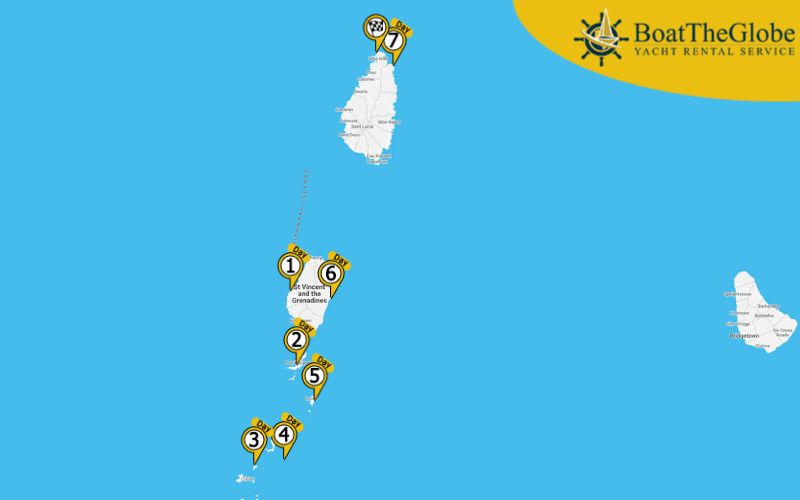
Day 1 St Lucia – St. Vincent and Bequia, Mt. Wynne Beach 57.2 nm
The first stop on the first day is St Lucia, heading towards the tropical islands of St. Vincent and Bequia. Mt. Wynne Beach is a real gem: calm, crystal clear water and lush green beaches greet you. Walking along the shore or relaxing on the deck, you will immediately feel the charm of the Caribbean.
Day 2 St. Vincent and Bequia, Mt. Wynne Beach – Bequia 13.1 nm
Today is a short distance, so you can explore the charming villages of Bequia at your leisure. In Port Elizabeth, you will be greeted by cafes, small shops and friendly locals, while traditional fishing boats rock in the harbor. A local rum punch is a real treat in the middle of the day. You won’t regret sitting on the beach and listening to the waves.
Day 3 Bequia – Mayreau 23.5 nm
Today you sail to Mayreau Island, one of the most peaceful places in the Caribbean. The white sands and turquoise waters of Salt Whistle Bay will immediately enchant you. Walking between the small villages will make you feel like you have traveled back in time. In the evening, watching the sunset from the deck is an unforgettable experience.
Day 4 Mayreau – Tobago Cays 9.4 nm
The Tobago Cays are a true Caribbean paradise: tiny islands, protected lagoons, coral reefs, and of course, sea turtles. If you like snorkeling, this day will definitely be your favorite. Stopping here is like being in the most peaceful place in the world, where there is only the sea and the sun.
Day 5 Day Tobago Cays – Mustique 14.0 nm
Now you arrive at the famous island of Mustique, where luxury and nature blend perfectly. The small bays along the coast are ideal for anchoring and relaxing. The local restaurants offer Caribbean flavors and fresh seafood. It is simply an incredible experience as the island’s relaxed atmosphere enchants you.
Day 6 Mustique – St. Vincent and Bequia, Black Point Tunnel 23.4 nm
You are heading back to St. Vincent, and the Black Point Tunnel is a truly special place. The narrow waterway awaits you with mangrove forests and a rich birdlife. If you like photography, this part is simply not to be missed, because nature is present at every moment.
Day 7. Day St. Vincent and Bequia, Black Point Tunnel – St. Vincent and Bequia, Grand Anse Beach – St Lucia 55.7 nm
The last day at Grand Anse Beach offers a short break before returning to St Lucia. The long, white sand beach is perfect for a final swim or a bit of sunbathing. Sip a final Caribbean cocktail on the beach as you bid farewell to the archipelago. When you arrive back in St Lucia, you can be sure that you have had the experience of a lifetime.
Sailing from St.Lucia to Martinique
This is no longer a “classic holiday” route, but a real sea tour. Several countries, longer journeys, border crossings, changing wind and wave conditions. Ideal for experienced sailors who love a challenge and autonomy. Recommended level: advanced, Open sea sections: yes (regular, long crossings)
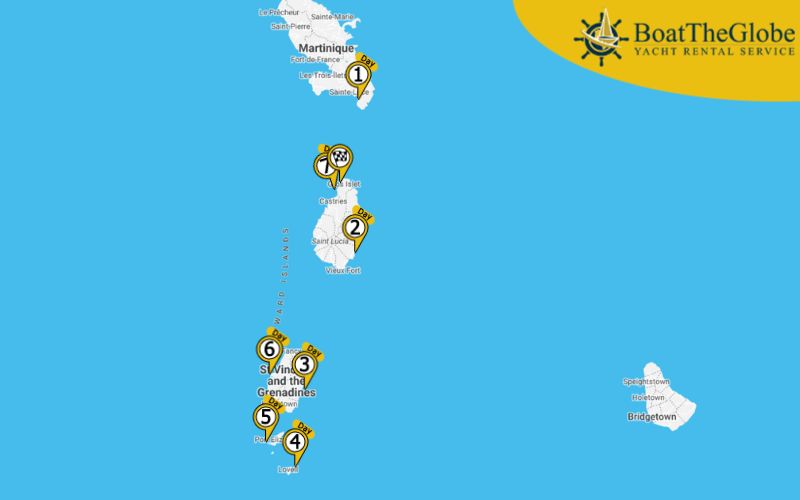
Day 1: St Lucia – Martinique (19.2 nm – Sailing time*: about 3 hours), Day 2: Martinique – Honeymoon Beach (39.2 nm – Sailing time*: about 6.5 hours), Day 3: Honeymoon Beach – St. Vincent and Bequia, Black Point Tunnel (35.4 nm – Sailing time*: about 5.5 hours), Day 4: St. Vincent and Bequia, Black Point Tunnel – Mustique (20.8 nm – Sailing time*: about 3.5 hours), Day 5: Mustique – Bequia (8.1 nm – Sailing time*: about 1.5 hours), Day 6: Bequia – St. Vincent and Bequia, Mt. Wynne Beach (16.4 nm – Sailing time*: about 3 hours), Day 7: St. Vincent and Bequia, Mt. Wynne Beach – Reduit Beach – St Lucia (53.5 nm – Sailing time*: about 8.5 hours)
* – an average 43 ft sailing yacht, with average weather conditions, sails around 6-7 knots per hour.
How to choose?
Saint Lucia is an excellent starting point for all levels – but the quality of the experience depends on adapting the itinerary to your own knowledge and comfort level, not the other way around.
- If you are preparing for your first Caribbean sailing trip: Stay around Saint Lucia, with short daily sections, sheltered bays.
- If you already have a routine at sea, but are adventure-oriented: Saint Lucia → Bequia → Tobago Cays, but leave rest days.
- If you are looking for a real maritime challenge: South to Martinique or a full Grenadine circuit, with long open sea crossings.
Fill out the form below, request a quote, book a yacht – and voila, you can splash around in the turquoise waters of Saint Lucia.
